


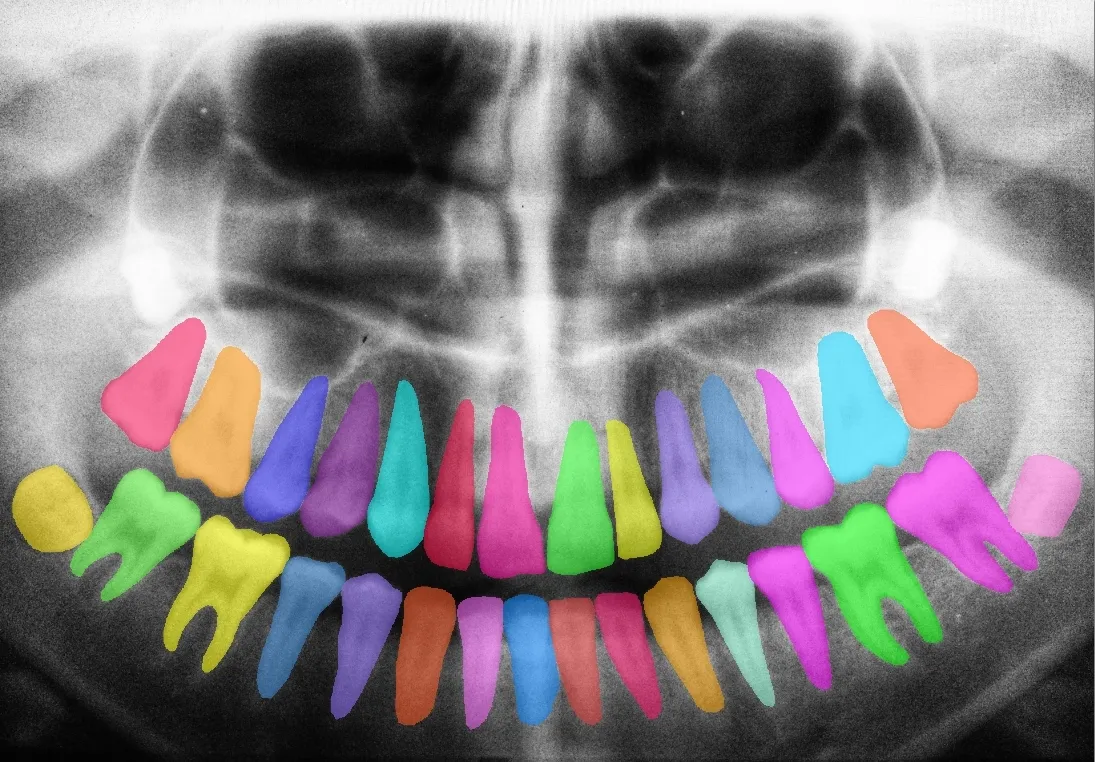
When we talk about the future of healthcare, the spotlight almost always shines on the finished product. We imagine AI assistants spotting tumors or algorithms predicting a patient’s condition before all the symptoms appear.
But the true power of medical AI doesn't come from the algorithm itself, it comes from the flawless accuracy of the data used to train it.
Because before AI can save a life, raw medical records including everything from complex 3D scans to hurried clinical notes, must be painstakingly prepared and structured for machine learning. This intensive, behind-the-scenes process is known as medical data annotation.
But here's the challenge: annotating medical data isn't just about drawing boxes around obvious features—it requires the precision of a surgeon, the knowledge of a specialist, and the attention to detail of a forensic investigator.
And the stakes? They couldn't be higher. A single poorly annotated data point could mean the difference between an AI system catching or missing a critical diagnosis.
So with the stage set, this article aims to explore the major types of healthcare data annotation, their practical implications, and the challenges they present.

Medical Data Annotation: What Makes It Unique?
Data annotation is common across many industries, but medical data annotation is in a category of its own due to a few unique challenges.
The Sheer Volume of Unstructured Data
Hospitals generate enormous amounts of raw records every second. According to analysis by the World Economic Forum, a typical hospital produces an estimated 50 petabytes of data annually, which is roughly the equivalent of 10 billion music files.
Yet despite this volume, the vast majority of it is effectively invisible to AI. An estimated 97% of hospital data goes unused, largely because it exists in unstructured forms like raw clinical notes, imaging files, and sensor readings, information that machines cannot interpret without first being labeled and organized.
Before any of this data can train an AI model, it needs to be annotated.
The annotation services burden that creates is enormous. Artificial intelligence models require massive labeled datasets just to reach clinical viability. Recent foundation models for 3D medical image segmentation, such as MedSAM2, require fine-tuning on hundreds of thousands of annotated image-mask pairs (Voxel51, 2025). Broader datasets like MedTrinity-25M span 25 million images across 10 imaging modalities and over 65 diseases.
This is why scalable, efficient annotation tooling is not a nice-to-have, it is the bottleneck. Without it, health systems are left sitting on petabytes of data they cannot use, and AI development stalls before it starts.
The Complexity of the Raw Material
Medical data is not just standard JPEGs, it involves specialized, multi-layered formats with high bit depths, such as DICOM and NIfTI.
These formats contain intricate anatomical details that require highly trained professionals to annotate accurately. The subtle variations in anatomy and the need for high precision in marking regions of interest make this task incredibly complex and time-consuming.
Furthermore, the accuracy requirements are absolute. In 2025, top-tier AI diagnostic tools exceeded 95% accuracy in detecting conditions like lung cancer and retinal diseases.
A 2024 study published in Cancer Science illustrates this directly. Researchers found that traditional AI models trained on unannotated or poorly labeled X-ray data achieved sensitivities of only 60–70% in detecting osteosarcoma. When the same model was retrained using high-quality annotations from an experienced oncologist, sensitivity jumped to 95.52% and specificity to 96.21% — a difference that, in a clinical setting, is the difference between catching a tumor and missing it (Hasei et al., Cancer Science, 2024).
Because of this complexity, files require highly skilled labelers who are both specialized healthcare professionals and proficient with complex annotation software.
Strict Privacy and Compliance Standards
Given the sensitive nature of personal health information, medical data annotation must be handled securely at all times.
Every step of the annotation pipeline must comply with strict regulations like the Health Insurance Portability and Accountability Act (HIPAA) in the US and the General Data Protection Regulation (GDPR) in Europe. These regulations ensure patient data is never exposed or mishandled, adding a layer of operational complexity not found in standard data labeling.
The risks of failing to secure this data are severe. In 2024, the US Department of Health and Human Services received reports of 742 large healthcare data breaches, and in just the first half of 2025, over 31 million individuals had their protected health information exposed in major breaches. Healthcare breaches are the costliest of any industry, averaging $7.42 million per incident.
To mitigate these risks, annotation workflows must involve rigorous anonymization of patient data before it ever reaches an annotator. Organizations must employ stringent data governance measures, secure facilities, and robust data protection protocols.
Types of Medical Labeling and Their Applications
Every day, hospitals generate a tsunami of data in various formats—from crystal-clear 3D brain scans to hurried emergency room dictations. Each type of data requires its own specialized annotation approach. Let's dive into the four critical domains where annotation is revolutionizing healthcare:
- Images: The foundation of medical AI, from X-rays to cellular microscopy
- Audio: Capturing everything from heart murmurs to emergency calls
- Video: Dynamic data from surgical procedures to patient monitoring
- Text: The hidden goldmine in medical records and research papers
Let's explore how each type is transforming patient care.

Medical Image Annotation
When you hear "medical imaging," you might think of simple X-rays. But today's medical imaging spans a mind-boggling range: from atomic-level electron microscope scans to full-body 3D MRIs. Each requires its own annotation approach:
- For disease prevention, the most critical part of annotation is to label the object on the image as ‘normal’ or ‘abnormal.’ This annotation type is vital in detecting abnormalities and producing correct diagnoses. This is usually called image classification—as the name suggests, classifying the image into a predefined category or class.
- For other purposes, such as pre-surgery scanning, it is vital to locate and mark the exact object position—type of annotation is called object detection.
- Another type of medical image annotation is connected to labeling all the image components presented—image segmentation. One can label each separate object as a whole (so-called instance segmentation), or go as deep as labeling each pixel with a category label (so-called semantic segmentation).
Each of these types of annotation can be further divided into specific ways of annotating the data based on the technique used, for example,
- creating a figure around the object in the image (bounding box or polygon),
- locating the specific part/feature of the image (keypoints),
- marking objects in the picture for multiple image alignment (landmarking),
- or even creating a collection of points to mark the 3D coordinates of the image (point cloud).
At leading institutions like the Mayo Clinic, which runs over 200 AI projects, annotated imaging datasets are used to train models that can highlight pulmonary embolisms on CT scans or detect early-stage cancers.
In the research community, open-source platforms like the Computer Vision Annotation Tool (CVAT) have become essential for this work.
In a 2026 study published in Acta Ophthalmological, researchers used CVAT to manually annotate nearly 27,000 diabetic-related retinal lesions in wide-field images, a dataset that then trained a segmentation model capable of automatically differentiating minimal diabetic retinopathy from more severe, sight-threatening stages.
In a separate study, researchers in Nigeria used CVAT to annotate over 3,300 high-resolution colposcopy images, creating a foundational dataset for AI-driven cervical cancer screening in low-resource settings.
Medical Audio Annotation
While medical images are widespread, medical data is not limited to visuals—another important type is medical audio annotation. For example, the already mentioned emergency care field relies heavily on distinguishing keywords in inbound emergency calls to identify the issue correctly and dispatch the right team.
Here we can distinguish the two most important types of data annotation:
- Conversation recordings (or, more generally, spoken language recordings) that include all the doctor-patient talks and dictations, and
- Physiological sounds (or Auscultation sounds)—heartbeats, lung sounds, bowel movements, and other varieties of sounds recorded on medical devices.
In addition to disease prevention and research, similar to other types of annotation, spoken language recordings are an extremely valuable asset to train AI to correctly recognize speech and medical jargon and then compile comprehensive notes from each conversation or fill in necessary forms—extremely valuable for the efficiency and accuracy of note-taking.

Medical Video Annotation
Medical video annotations include a multitude of data, from surgical procedure videos to surveillance of patient behavior. It must be mentioned that medical videos play an enormous role in teaching young medical professionals in their specialized fields.
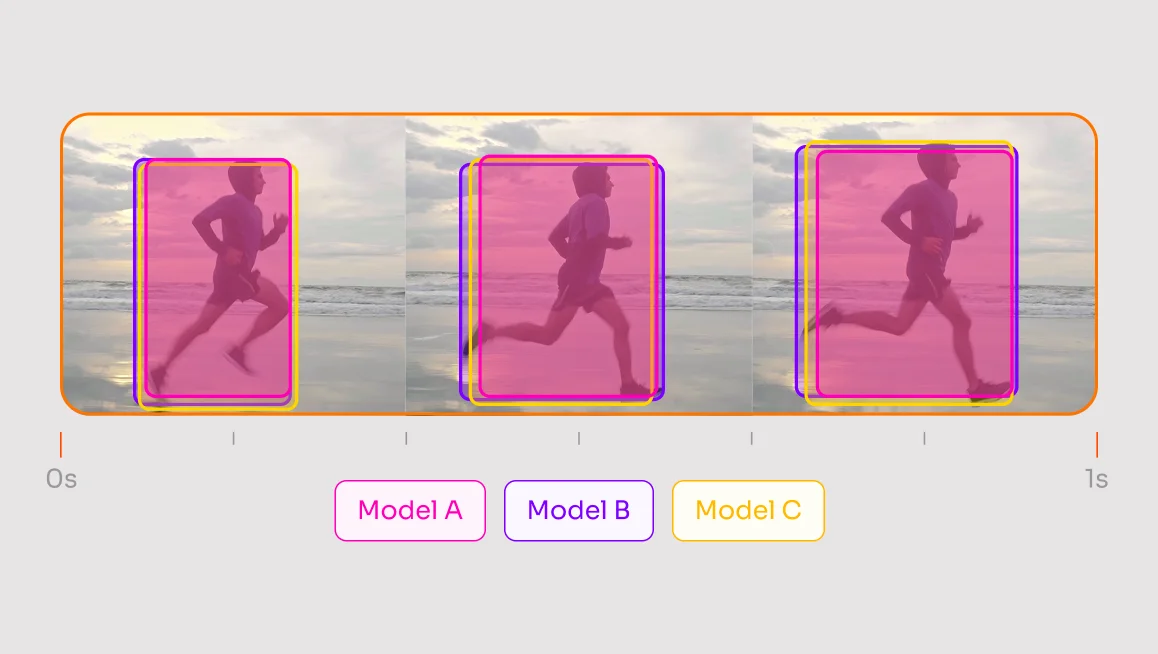
This raw data can be annotated frame-by-frame or segment-by-segment. The most common types include:
- Annotation of video diagnostics—similar to image annotation—can help in the first stages of treatments to produce a correct diagnosis for the patient. These videos can include videos from any in-body camera footage (colonoscopies, laparoscopic surgeries, etc.) as well as ultrasounds and echocardiograms.
By labeling and annotating anomalies and pathologies in each frame of the footage, we can assist in teaching AI to detect anomalies, minimizing the manual work for the clinicians and being able to go through a much larger amount of footage in a shorter time.
- Annotating surgical videos by labeling them with timestamps to determine each stage of the surgery (e.g., incision, dissection, suturing, closure, etc.) or marking the object’s location in the video with a bounding box (tools, tumors, anatomical elements, etc.)—this has an enormous practical value not only in providing insights into correct surgical procedures and best field practices but in real-time flagging errors and possible surgery complications.
- Patient monitoring includes a variety of data from motion analysis in rehabilitation to patient surveillance in their rooms. While rehabilitation footage is great for tracking a patient's progress toward recovery, surveillance footage can assist in greater safety for patients that pose a risk to themselves or others. Here we must emphasize the privacy of the recording and its ethical handling.
This type of annotation is actively shaping the future of the operating room.
In a 2024 study presented at the ARVO Annual Meeting, researchers at the University of California Irvine used CVAT to annotate surgical tool depth across 66,920 frames of vitreoretinal surgery video.
The study found that surgeon-annotators achieved significantly higher consensus than non-surgeons, a finding that underscores just how much annotation quality depends on clinical expertise.
Beyond the OR, ICU programs at hospitals like Massachusetts General Hospital use annotated monitoring data for labeling specific events like the early signs of patient deterioration to train predictive models that alert care teams long before a crisis becomes clinically obvious.
Medical Text Annotation
A huge amount of data in the healthcare sector is created manually in the form of notes, patient records, prescriptions, research papers, and so on. This raw data can and should be labeled and annotated as well. Similarly to image and video annotation, this data can be labeled as a whole document, or on the sentence/tag level.
- By classifying the documents according to their contents, medical specialty, or even labeling them by symptoms, test values, etc., mentioned within, one can create a huge database that can be used by ML to interpret and cross-reference, which can refine multiple medical fields, such as diagnostics, medication prescription, and medical research, to name a few.
- By labeling any specific information within the document, such as specific diseases, links between symptoms and medication, findings, etc., one can fine-tune the annotation and make interpretations more specific and accurate.
While images and video get much of the attention, clinical text remains a massive, largely untapped resource. Clinical notes, discharge summaries, and pathology reports must be labeled with standardized concepts, entities, and relationships to power NLP models for coding support, clinical decision support, and research.

What Are the Main Challenges of Medical Annotation Services?
Medical annotation is significantly more demanding than standard data labeling, and the challenges go well beyond technical complexity. The stakes are uniquely high: a single mislabeled tumor or misclassified ECG trace doesn't just affect model performance, it can directly influence a clinical diagnosis.
The most common challenges teams run into include:
- Annotator expertise: Unlike labeling cars or pedestrians, medical annotation often requires annotators who are both clinically trained and proficient with annotation tooling.
- Specialized file formats: Medical data comes in formats like DICOM and NIfTI that most general-purpose tools simply weren't built to handle.
- Privacy and compliance: Every annotation workflow must be structured around HIPAA requirements to ensure patient data is never exposed or mishandled at any stage of the pipeline.
- Scale: Hospitals generate enormous volumes of imaging, audio, and text data daily, and annotation pipelines must keep pace without sacrificing precision.
- Inter-annotator inconsistency: Even trained annotators disagree. Without robust quality control processes, inconsistency between labelers quietly degrades model performance over time.
Choosing the right tooling goes a long way toward solving most of these problems before they start.
What Tool Works Best for Medical Annotation & The Healthcare Industry?
We’ve discussed all the different types of medical data annotation and highlighted its areas of usage and importance in the healthcare industry. All of the above further solidifies that choosing the correct annotation tool is a crucial decision for any medical project.
CVAT data annotation software stands out as a powerful solution for medical annotation projects.
- It works with most file formats, and its open-source nature enables the possibility to be customized to handle DICOM or NIfTI medical imaging files.
- Unlike some image-only annotation tools, CVAT handles video annotation, which is great for medical projects with cine loops or surgical videos.
- CVAT can also handle large-scale projects and big datasets, which makes your project easily scalable.
And, most importantly, CVAT has an active community and is continuously improving. There are plugins and scripts available (for automation, pre-processing, etc.), and if a needed feature isn’t there, one can modify the code.
In summary, CVAT offers a strong combination of flexibility, scalability, and cost-effectiveness for medical data annotation. It may require a bit more setup, compared to some turnkey commercial solutions, but it gives you full control.
Medical Annotation Is Shaping the Future of Healthcare — Here's How to Be Part of It
The role of AI in healthcare continues to expand as applications become more sophisticated and widespread. But the key thing to remember is that behind every AI-powered diagnostic tool, predictive model, or clinical decision support system lies thousands of hours of painstaking work: medical data labeling.
When implemented effectively, these tools enhance the accuracy of AI-driven diagnostics and treatments, allowing healthcare professionals to focus more on patient care rather than routine data interpretation.
And as medical technology continues to evolve, the importance of high-quality data annotation will only grow, making it a foundational component in the future of healthcare delivery and improved patient outcomes.
For organizations looking to implement or improve their medical data annotation processes to build the next generation of healthcare AI:
Try CVAT Online to explore our flexible and customizable medical imaging annotation solution.
Or learn about CVAT Enterprise for teams requiring additional security, control, and advanced team management features.
And if you're looking for expert assistance to handle complex medical datasets, our professional CVAT Labeling Services are perfect for you.
Frequently Asked Questions About Medical Data Annotation
What is medical data annotation?
Medical data annotation is the process of labeling raw healthcare data, such as medical images, audio recordings, video footage, and clinical text, so that AI and machine learning models can learn from it.
Every bounding box drawn around a tumor, every keyword tagged in a patient transcript, and every frame labeled in a surgical video becomes training data that teaches AI systems to recognize patterns, make predictions, and support clinical decisions.
What types of data are used in medical annotation?
Medical annotation covers four primary data types. Images are the most common, spanning X-rays, MRIs, CT scans, and microscopy slides. Audio annotation covers physiological sounds like heartbeats and lung function recordings, as well as doctor-patient conversations.
Video annotation is used for surgical footage, diagnostic cine loops, and patient monitoring. Text annotation handles clinical notes, EHR records, prescriptions, and research papers. Each type requires a different annotation approach and a different level of domain expertise.
How accurate does medical annotation need to be?
Extremely accurate. In most industries, a small percentage of labeling errors is an acceptable tradeoff for speed. In healthcare, that calculus changes entirely. A single mislabeled data point can skew a model toward a wrong diagnosis.
Most medical annotation projects require strict quality control processes, inter-annotator agreement checks, and multiple rounds of review to meet the precision standards that clinical AI demands.



.svg)
.png)

.png)




.png)